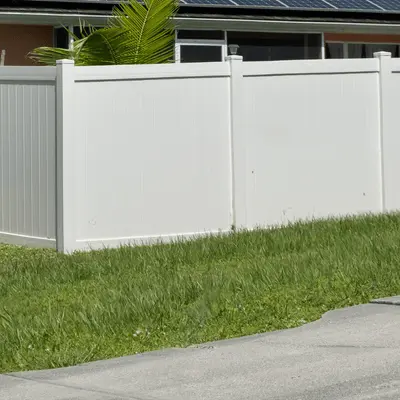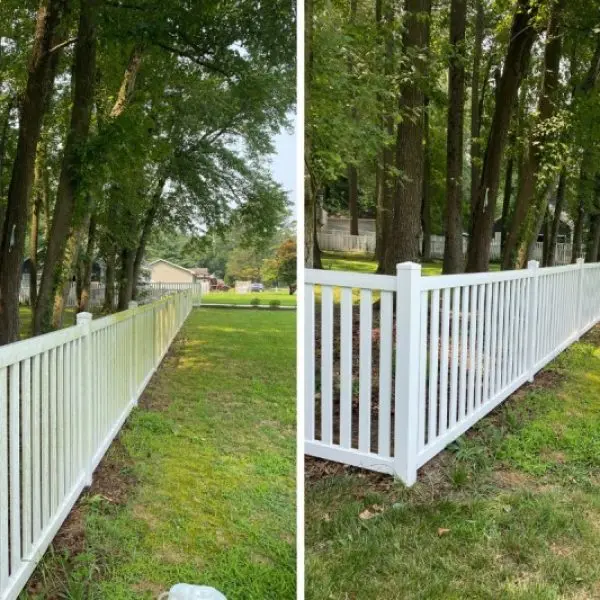



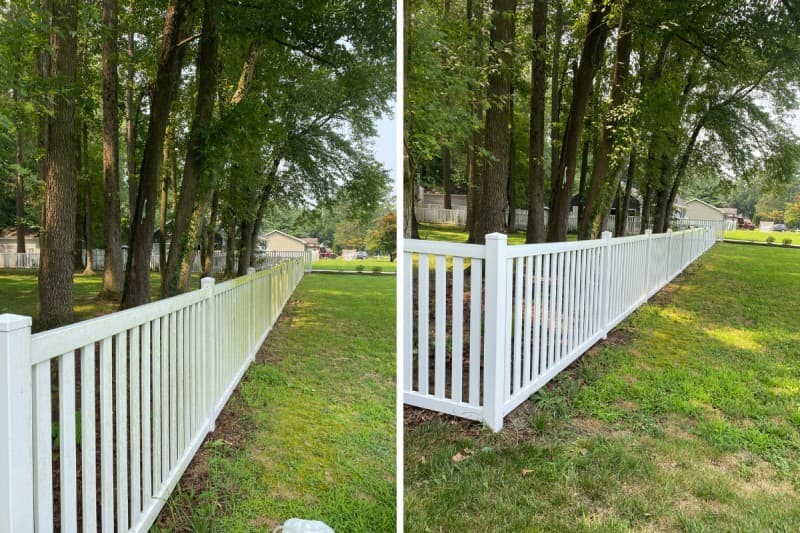

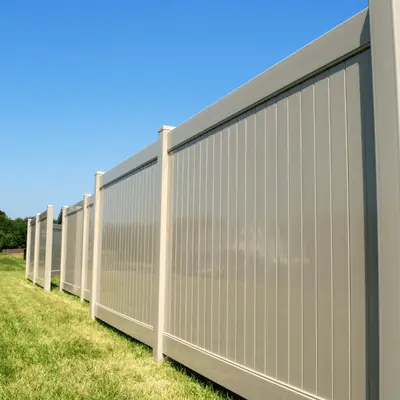
A fence that runs along the edge of your yard or separates your property from a neighbor’s tends to get overlooked until the buildup becomes hard to ignore, green algae spreading across vinyl panels, dark organic staining creeping into wood grain, or a general layer of grime that makes the whole yard feel unkempt no matter how well the rest of it is kept up. Delaware’s humidity and shaded lots provide algae and other biological growth with plenty of conditions to thrive, and fences collect it quietly over time.
At Ortiz Pro Wash, we treat vinyl and wood as two separate jobs because they are. Vinyl needs a pretreat, a proper dwell period, and a section-by-section wash to lift algae and dead organic growth before it has a chance to dry back onto the surface. Wood requires a deeper process; contamination works into the pores, chemistry has to be managed as it runs down the boards, and the work has to be thorough enough to actually clear what’s embedded in the grain. Whether you’re a homeowner, a landlord, or managing a residential complex, the approach changes based on what’s in front of us.
If your fence has been looking like it needs attention, we’re glad to take a look. Get in touch for a free estimate, and we’ll put together a plan based on your material and what it’s dealing with.
For standard fence cleaning, pricing is usually based on the number of fence sections, since fences are typically installed in sections.
We generally charge around $10 per section. In practical terms, that means many standard fence cleaning jobs may start around $200 and go into the high hundreds, with some larger projects reaching around $1,000, depending on how much fencing needs to be cleaned.
We do not treat every fence like it needs the same level of work. The exact quote depends on the scope of the job and the level of cleaning required.
Wood fence cleaning is priced separately because the process is heavier. It can start around $300 and run to about $1,500 or more, depending on the fence. That higher price is tied to the way wood behaves. It penetrates deeper, requires more cleaners and detergents, and takes longer because the fence is vertical and the chemistry runs downward during the job.
This service is focused on cleaning and restoration-style washing. Repairs are not included. If the fence is damaged, we usually recommend a handyman for smaller repairs.

For vinyl fences, we use a pretreatment process: spray the surface, let the cleaner dwell, then rinse to remove green algae and dead organic growth. We do the work in sections rather than covering a large area all at once. That matters because it helps keep the cleaners from drying out on the surface, which can cause other issues.

White vinyl fences are cleaned with the same vinyl process. We pretreat, allow dwell time, and then wash everything very thoroughly, section by section. The goal is to remove the visible buildup while keeping the work controlled from one area to the next.

Wood fences are handled with a more detailed process because wood is porous and can trap contaminants deeper within the material. We work in sections, spray an algaecide to kill organic growth and bacteria, apply an emulsifier to bring contaminants out of deep within the pores, use pressure to remove the buildup, and finish with a wood brightener to improve the final appearance. This is why wood fence cleaning takes more time, more chemicals, and more labor than vinyl fence cleaning.

We do not treat every fence like it should be cleaned the same way. Vinyl gets a pretreat, dwell time, and a controlled wash. Wood gets a more restoration-style process. That matters because the method should match the material.

We clean in sections instead of trying to cover the whole fence at once. On vinyl, that helps keep cleaners from drying on the surface. On wood, it helps us stay even and thorough from one section to the next.

For wood fences, we use an algaecide, an emulsifier, pressure, and a wood brightener. That sequence is built for organic growth, bacteria, and contamination that sit deeper in the pores, not just surface dirt.

We use both a power washer and a soft wash system, and we regulate the pressure we apply. That gives us control over how the fence is cleaned, rather than relying on a single approach for every job.

We use sodium hypochlorite at a minimum concentration, not a high ratio, and we adjust the ratio based on the weather. In hotter conditions, we cut it down. In colder conditions, we may increase it somewhat so the cleaners still work properly.

We use Plant Wash and other neutralizing agents to offset the effects of cleaning solutions. We spray those on the plants so we can leave the property without worrying that the shrubs or bushes will die. That matters in fence jobs because fences often sit right next to grass lines, beds, and backyard landscaping.

We follow up right away after an inquiry, send reminders as the service date gets closer, and send an hour-before-arrival notice when we are on the way. After the work is done, we follow up again, send a receipt, and check in afterward.

If a customer wants to know which products we use or whether the solutions are safe, we explain. We can also provide a material safety data sheet so the customer can review the product information for themselves.
Most jobs start when a homeowner contacts us by phone or email. That gives us the first look at what needs to be cleaned and lets us start the conversation quickly.
We immediately follow up by email and phone. That helps answer the first question early, especially around timing, pricing, and whether the cleaning solutions are safe.
Before quoting the work, we set an appointment to inspect the property. That gives us a chance to see the amount of fence, the material, and the level of cleaning the job will require.
At the meeting, we go over the options, the services, and the details. This is where we explain the difference between a vinyl fence cleaning and a wood fence cleaning so the customer knows what the job actually involves.
After the visit, we follow up with an email that includes the proposal. That gives the customer a written quote instead of a vague estimate.
When the quote is approved, we move the job onto the schedule. This gives the customer a clear next step instead of leaving the project open-ended.
As the service date approaches, we send a reminder that the fence cleaning is scheduled. That helps keep the job organized and easy to plan around.
About an hour before we arrive, we let the homeowner know we are heading over. That way the customer is not left wondering when the crew will show up.
Before and during the work, we use Plant Wash and other neutralizing agents around plants and nearby areas. We also adjust the cleaning ratio based on the weather so the chemistry works properly without using more than the job needs.
For vinyl, we pretreat, let the cleaner dwell, and wash the fence section by section to remove green algae and dead organic growth. For wood, we work in sections, apply an algaecide, use an emulsifier to draw contaminants from the pores, pressure-wash thoroughly, and finish with a wood brightener.
We do not offer a fence-specific written warranty, an algae-free guarantee, or a free re-clean window for fence cleaning. We want to be clear about that.
What we do offer is a stated satisfaction approach. When the job is completed and the homeowner is present, we make sure they are happy before finishing. If a customer is not happy, we first try to go back and make it right. If that still does not resolve the issue, we may offer some form of money-back consideration to ensure satisfaction. The onboarding also states that we have insurance.
Standard fence cleaning is usually priced around $10 per section. Many jobs fall within a rough range of about $200 to the high hundreds, with some larger jobs around $1,000. Wood fence cleaning can start around $300 and run to about $1,500 or more.
Wood needs a more thorough process. It uses more cleaners and detergents, takes more time, and includes extra steps like an algaecide, an emulsifier, pressure washing, and a wood brightener.
A smaller vinyl fence can take about 1 to 3 hours. A wood fence can take about 6 to 12 hours, and in some cases, 2 days.
On vinyl, we are removing green algae and dead organic growth. On wood, we also deal with organic growth, bacteria, and contamination that are buried deeper in the pores.
We use Plant Wash and other neutralizing agents to offset cleaning solutions, and we use sodium hypochlorite at a minimum concentration. We can also provide a material safety data sheet and explain the products we use.
No. We do not do repairs like that. If the fence has minor damage, we usually recommend a handyman.
The fence-specific onboarding did not include a detailed prep checklist. What we do know is that customers often ask what they need to do, and we answer those questions quickly before the job.
We accept cash, credit cards, checks, Zelle, Venmo, and PayPal. If the homeowner is not present, we can send an invoice with net 15 or net 30 terms.
If you need fence cleaning for a vinyl fence, a white vinyl fence, or a wood fence, call Ortiz Pro Wash at (302) 228-6599. We will talk through the job, inspect the property, explain the process, and send a formal proposal so you know what the work involves before it is scheduled.