




Awning Cleaning in Delaware
An awning is one of the first things a coastal climate goes to work on. Through the warm Delaware months, mold, mildew, algae, and pollen settle into fabric and vinyl faster than most owners expect, and metal awnings pick up staining from salt air and road traffic. Left alone, that buildup turns a bright entrance dull and streaked.
We clean commercial awnings for storefronts, restaurants, and office and building entrances, and we match the cleaning method to the awning material so the contamination lifts without harming the fabric, the vinyl, or the frame underneath. When an awning is due at the same time as the walls behind it, we can fold it into a full commercial building washing visit. That means fabric gets a gentle touch and metal gets the pressure it can stand up to. It is the kind of detail work Ortiz Pro Wash is built around.
If your awnings have gone dingy and you want them looking sharp again, call us at (302) 228-6599 and we will take a look.
The right cleaning method depends entirely on what the awning is made of, and the pressure and approach that safely cleans a metal awning would damage fabric or vinyl.

Fabric awnings get a soft wash only: low pressure paired with a high-dwell cleaning solution applied carefully, with no aggressive scrubbing. The solution does the work, lifting mold, mildew, algae, pollen, and staining without saturating the material or forcing water into the seams. Fabric takes the brunt of Delaware’s heavy pollen and coastal humidity, which is exactly why the gentle approach matters here.
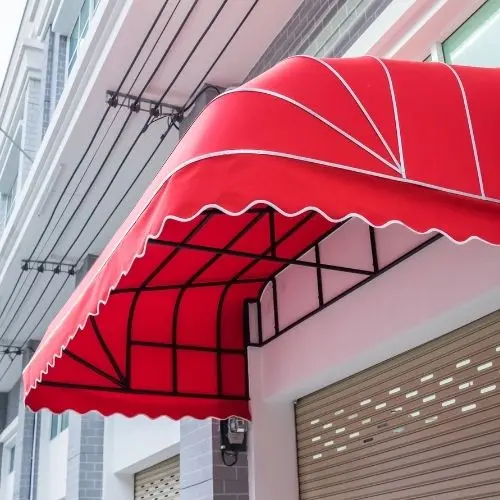
Vinyl tolerates a little more pressure than fabric, but we still clean it gently with a soft wash approach. An eco-friendly cleaning solution removes organic growth and environmental staining while keeping the surface intact.
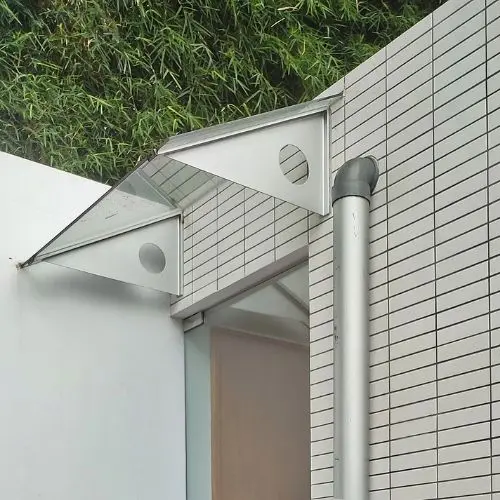
Metal handles more pressure than fabric or vinyl, so these get a power wash. The standard approach clears diesel exhaust film, organic growth, and the environmental buildup that dulls a metal awning over time.

Beyond a clean awning, here is what you get when our crew handles the job.

The wrong pressure on the wrong material is how awnings get ruined mid-cleaning, with torn fabric, split seams, or water driven behind the panel. Reading the material first and setting the pressure to match is what keeps a cleaning from doing more harm than the dirt ever did.

Our cleaning solutions are eco-friendly and biodegradable. Before we leave, we treat the surrounding landscaping with a neutralizing plant wash, so the greenery under and around a storefront awning is protected as a standard part of the job rather than an upgrade you have to ask for.

You should not have to close your doors or lose a day of business to get your awnings cleaned. We plan the job around your foot traffic and keep customers moving in and out while the crew works, so the cleaning happens without costing you sales.

For storefronts and restaurants, the awning is a visible piece of your brand. A clean, bright awning signals professionalism to customers before they ever reach the door, and a stained or mildewed one does the opposite. Many owners have us handle the awning as part of a fuller storefront cleaning so the whole entrance reads sharp.

A cleaning is only as good as what it is cleaning. We look over the frame and attachment points first, so a worn bracket or loose bolt gets caught before it becomes a bigger problem, and you get an honest read on the awning’s condition along with a clean surface.

From your first call to the finished invoice, here is how a job runs.
A property manager or business owner reaches out by phone or email, and we schedule a site visit to review the awnings, their materials, size, and access. You get a free written proposal that covers the scope and what to expect. A couple of follow-up touches along the way are normal for commercial work.
Once you approve the proposal, we schedule the work for your lowest-traffic period to keep disruption down. For an open business we scale up the crew so the job moves fast, and we confirm the start date with you ahead of time.
Before any water touches the awning, the crew inspects the frame and attachment points and flags any structural concerns to the property manager. This is the honesty step: we would rather point out a problem than clean around it.
Fabric and vinyl awnings get a low-pressure soft wash using our soft wash system and low-pressure nozzles, with a high-dwell eco-friendly cleaning solution applied carefully, no aggressive scrubbing, and no water forced into the seams. Metal awnings get a power wash.
We rinse the awning clean and treat the surrounding landscaping with a plant wash neutralizing solution before we pack up. If a customer needs to reach the door during wet work at an open business, a team member escorts them through with an umbrella.
When the work is done, we walk the finished awnings with you if you are on-site, and we can send photos if a busy schedule keeps you away. The invoice follows on net 30 or net 60 terms, and we do not consider the job finished until you are satisfied with how the awnings look.
If you reach out to us and you are not happy with the service, we come back out and redo the work to make it right. In the rare case that a return visit still does not settle it, we work with you on a fair partial refund. Our aim is to earn the account for the long run, so we stand behind the result on every commercial job.
No. Fabric and vinyl awnings are never pressure washed; they are cleaned with a low-pressure soft wash that lifts contamination without forcing water into the seams or scrubbing the material aggressively. Metal awnings can handle a power wash, so those are cleaned with more pressure. Matching the method to the material is how an awning gets clean without being damaged.
For most Delaware commercial properties, a spring and a fall cleaning keep awnings ahead of the region’s heavy pollen and coastal humidity. Awnings collect organic growth, pollen, and bird droppings quickly in this climate, so high-visibility storefront and restaurant awnings often benefit from more frequent attention. We can recommend a cadence during the walkthrough based on your specific awnings and location.
We inspect the awning frame and attachment points before we start and flag any structural concerns to the property manager before cleaning. If something is worn or loose, we tell you upfront while there is still time to act on it. We stick to cleaning and leave awning repair to a specialist, so we point out what we find and let you get it handled the right way. On brand-new or recently renovated properties, awning cleaning is often part of a broader post-construction cleanup once the building work wraps.
Yes. We schedule awning cleaning during your lowest-traffic period and scale up the crew so the job moves quickly with minimal footprint. If customers need to pass under the work area while the crew is cleaning, a team member can escort them through with an umbrella during wet work. After-hours scheduling is also available to keep disruption to a minimum.