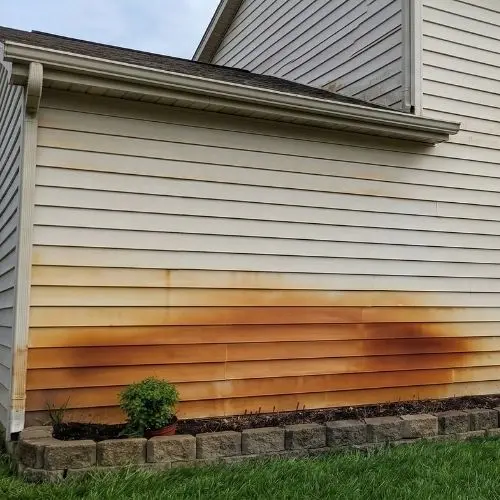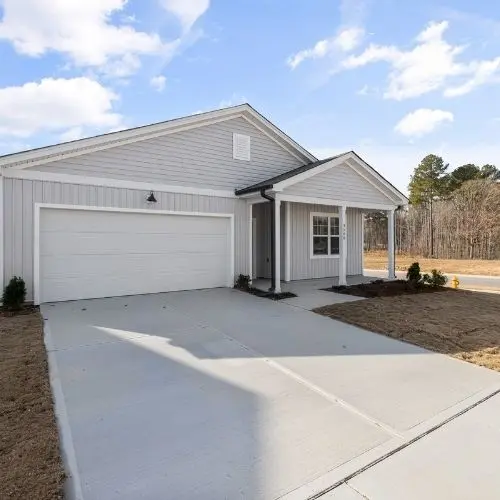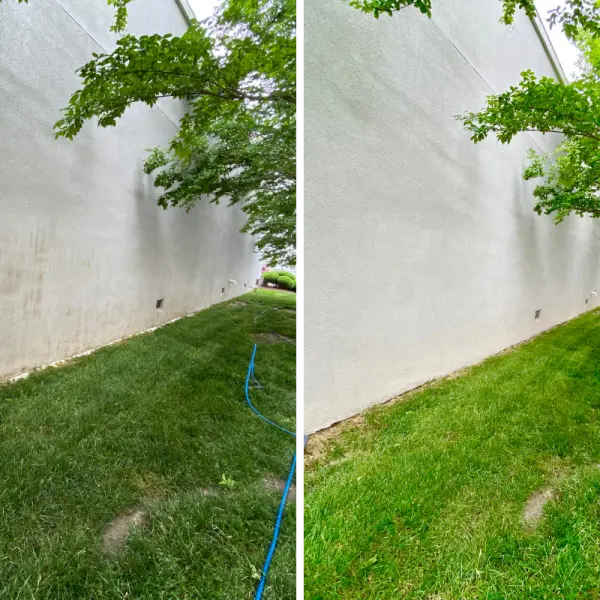



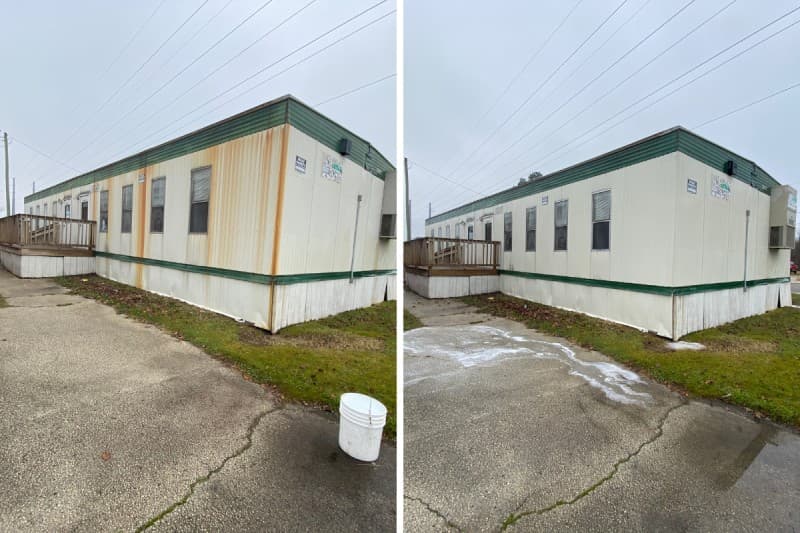

Rust stains have a way of standing out, an orange streak running down a concrete driveway, a discolored patch on siding where the irrigation hits, a spreading stain along a walkway edge that showed up after fertilizer season. They’re not all caused by the same thing, and they don’t all sit on the surface the same way. Trying to treat them without knowing what caused them or what material they’re on usually ends up with you using the wrong product and still seeing the same stain afterward.
At Ortiz Pro Wash, rust removal starts with a diagnosis. We identify what caused the staining, whether that’s irrigation water, fertilizer runoff, metal oxidation, or something else, and what surface it’s settled into before we choose a cleaner. Rust on concrete responds differently from rust on vinyl siding or painted surfaces, and the chemistry and handling must match the material. That’s not extra caution for its own sake; it’s just how the job gets done without wasting product or leaving results behind that don’t hold.
If you’ve got rust staining that hasn’t responded to anything you’ve tried, we’re glad to take a look. Get in touch for a free estimate, and we’ll figure out what’s going on and what it will take to clear it.
Standard rust-removal jobs usually range from $500 to $2,500. More involved or unusually difficult projects may reach around $3,000.
The final price can vary quite a bit depending on the surface and the stain’s difficulty. Concrete is one of the biggest pricing variables because it is harder to clean than vinyl-type surfaces and often takes more time and a different process. A smaller rust-removal job on a vinyl-type surface may take only a few hours, while a more difficult concrete job can take most of the day.
If a stain cannot be removed, we do not charge the full service amount and usually charge only for the cleaners used.
We do offer a few price breaks that are already part of our locked pricing. Our spring promotion is to book 2 services for about $100 off. We also offer military and veteran discounts ranging from 5% to 15%.
Those savings only make sense when the services and timing fit the property, so we do not force a bundle where it does not belong. If rust removal is part of a larger exterior cleaning need, we can account for that when we inspect the property and put the proposal together.

Concrete, driveways, and similar hard surfaces usually need the most work during rust removal. We do not treat them like vinyl because they are harder to clean and often hold staining more stubbornly. We use a different process and different cleaners than we would on a lighter exterior material, and this is one reason concrete jobs can take much longer and cost more than rust removal on vinyl-type surfaces.
This method matters because concrete is often where homeowners see the heaviest orange or brown staining from irrigation or runoff, and it is also where a one-size-fits-all wash tends to fall short. We adjust the treatment to the stain source and the surface, regulate pressure by material, and work the stain with the chemistry that makes sense for that specific job.

When rust appears on siding or in stained areas near the house, we slow the job down and focus on surface identification first. We look at what caused the stain, what material is affected, and how close that area is to landscaping and other nearby surfaces before we choose the cleaner. Pressure is regulated by the surface, and the chemistry is chosen after the stain source is identified.
That extra care matters because siding sits near windows, trim, plants, and other materials that need protection while the stain is being treated. We use plant protection and neutralizing measures as part of the job, including Plant Wash and other neutralizing agents as needed. On this rust-removal page, we are not claiming brick, stucco, or Hardie board as confirmed rust-removal surfaces.

Vinyl fence and other vinyl-type surfaces are handled differently from concrete. In many cases, they can be cleaned more efficiently, and some rust-removal jobs in these areas may take only a few hours instead of most of a day. That does not mean we rush the work. It means we choose the process that fits the material instead of applying the same method everywhere.
This matters because vinyl can respond well when the stain source is correctly identified, and the chemistry matches the problem. We still regulate pressure by surface and work carefully around the surrounding areas. The goal is to treat the staining without turning a smaller surface problem into a bigger property problem.

We do not start with a guess. We identify the stain source and confirm the surface before we choose the cleaner. For normal rust from irrigation or hot-water-related staining, we may use a standard rust remover. For fertilizer-related or battery-acid-type staining, we may use Frontline or Frontline Restoration instead. That matters because rust-look stains do not all come from the same source, and the right result depends on choosing the right treatment first.

Rust removal is not only about the stain itself. It also covers the plants, surrounding surfaces, and the rest of the property adjacent to the work area. We use Plant Wash and other neutralizing agents as needed, regulate pressure by surface, and adjust solution strength based on weather conditions. We can also provide safety information, including a material safety data sheet, when needed. That gives homeowners a clearer picture of what we are using and why.

Not every rust stain can be fully removed, and we do not pretend otherwise. If we do not think a stain will come out, we say so. If the stain cannot be removed, we do not charge the full service amount and usually charge only for cleaners. That matters because it keeps the conversation honest before the work starts and keeps the customer from paying full price for a result the surface or stain source will not allow.

We make the process easy to follow from the first call or email through the final receipt. We schedule an inspection, send a formal proposal, send reminders, and give a one-hour heads-up before arrival. When the job is done, we notify the homeowner, send a receipt, and follow up with a review request in the next day or two. That matters because people want to know when we are coming, what is happening, and what comes next, without having to chase updates.

This page is built for residential rust removal in Delaware, including coastal Delaware and Sussex County communities, where exterior staining can become a recurring frustration. Local properties vary, and so do the sources of stain and surface conditions. We approach the job with that in mind, which helps us set clearer expectations and choose the right method for the property before us.
Most jobs start when a homeowner calls or emails us about staining they want looked at. We follow up, schedule an inspection appointment, walk the property, and review the affected area to understand the stain source, the surface, and the job setup. After that, we send a formal proposal and schedule the work if the homeowner wants to move forward. We also send reminders and a one-hour heads-up before arrival, so the day is easier to plan around.
Before we apply anything, we determine what caused the stain and what material it is sitting on. That step matters because normal rust, fertilizer-related staining, and battery-acid-type staining may need different treatment products. It also matters because concrete, siding, and vinyl-type materials do not all get handled the same way. This is where the job becomes specific instead of generic.
Once we know the source and the surface, we select the cleaner that fits the job. For irrigation or hot-water-related rust, we may use a normal rust remover. For fertilizer or battery-acid-type staining, we may use Frontline or Frontline Restoration. We can also explain the chemistry and provide safety information if the homeowner wants it. This step matters because the cleaner should match the stain, not just its color.
During the cleaning step, we regulate pressure by surface and use soft wash or power washing methods as appropriate for the material and the stain. We use Plant Wash and other neutralizing agents when needed to help protect landscaping and surrounding areas, and we adjust solution strength based on weather conditions. If the job requires us to bring our own water, that is already accounted for in the planning and quote. The point here is not speed for its own sake. It is safe, controlled rust removal based on the property conditions that day.
When the work is complete, we notify the homeowner. If the homeowner is present, we make sure they are happy before wrapping up. Payment is collected on-site when possible; if not, we can invoice on net 15 or net 30 terms. We accept cash, credit cards, checks, Zelle, Venmo, and PayPal. After payment, we send a receipt and follow up with a review request within 1 to 2 days to ensure the job is clearly closed out.
We do not have a long-term rust-removal warranty stated for this service, and we do not overstate what rust removal can do. Some stains come out well. Some improve but do not disappear completely. Some cannot be removed. Our customer protection for this service is more conservative. If a stain cannot be removed, we do not charge the full service amount and usually charge only for cleaners. If the homeowner is present when the job is finished, we make sure they are happy before we wrap up. That is the promise here: honest expectations, clear communication, and fair handling when the result is limited by the stain source or the surface.
The biggest factors are the amount of buildup, the size of the stained area, where the stain is located, the surface being cleaned, and the overall complexity. Access to water can also affect the price if we need to bring our own.
No. Not every rust stain can be fully removed. If the stain cannot be removed, we do not charge the full service amount and usually charge only for cleaners.
This page confirms rust removal for concrete, driveways, and other hard surfaces, siding, vinyl fence, and other vinyl-type surface areas. We are not claiming brick, stucco, or Hardie board as confirmed rust-removal surfaces on this page.
No. We first identify the stain source and confirm the surface. For irrigation or hot-water-related rust, we may use a normal rust remover. For fertilizer or battery-acid-type staining, we may use Frontline or Frontline Restoration.
It depends on the surface and the difficulty of the stain. Some vinyl-type surface jobs may take only a few hours, while harder concrete jobs can take most of the day.
We start with a call or email, schedule an inspection, send a formal proposal, and set the job date after approval. We also send reminders and a one-hour heads-up before arrival.
We collect payment on site when possible, or we can invoice on net 15 or net 30 terms. We accept cash, credit cards, checks, Zelle, Venmo, and PayPal, then send a receipt and a review follow-up within 1 to 2 days.
If you need residential rust removal in Delaware, we handle the job by first identifying the source of the stain, matching the treatment to the surface, and providing a clear proposal before scheduling the work. Whether the staining is on concrete, siding, a driveway, or a vinyl fence, we will tell you what we see, what we recommend, and what to expect from the result. Call Ortiz Pro Wash at (302) 228-6599 to schedule an inspection and receive a formal quote for your property.