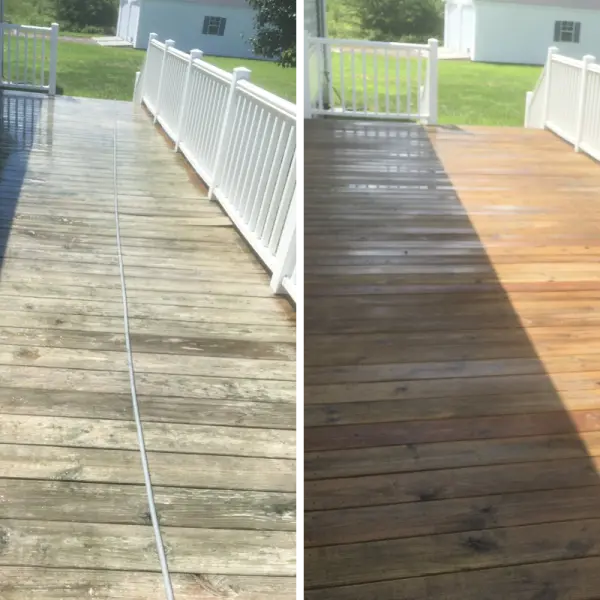




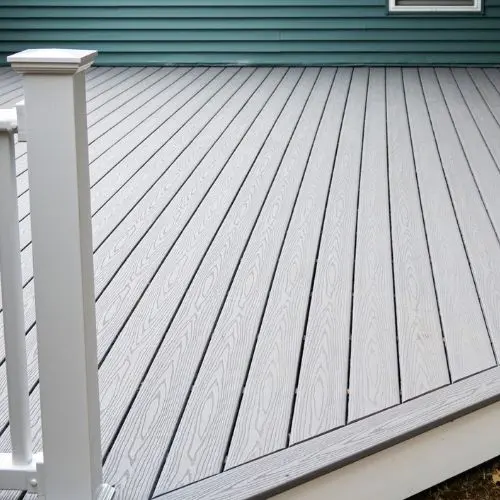
Decks around Delaware properties, especially those with shaded backyards, mature tree cover, or proximity to water, tend to collect more than just surface dirt. Green algae spreads across the boards, organic growth works into the grain, and spring pollen coats everything before most homeowners have had a chance to sit outside. The problem compounds fast, and by the time a deck looks visibly stained or slick underfoot, the contamination has usually settled in deeper than a basic rinse will reach.
At Ortiz Pro Wash, we don’t treat every deck the same way because they genuinely aren’t. Wood, composite, and cedar each hold dirt, oxidation, and biological growth differently, and cleaning them with a one-size approach is how you end up with a patchy finish or a surface that looks worse than when you started. We work through each job with the right steps for the material at hand, using wood brightening where needed and keeping the process even throughout so the result actually holds up.
If your deck has been looking worn down and you’re not sure what it would take to bring it back, we’re happy to take a look. Reach out for a free estimate, and we’ll walk you through exactly what we’d do and why.

Deck cleaning typically ranges from $150 to $600–$700, depending on the size, material, and overall complexity of the job.
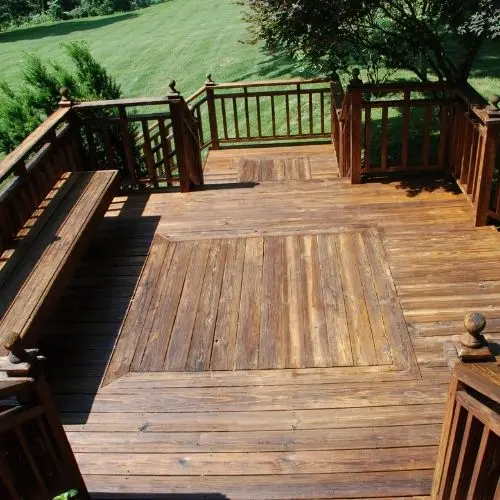
Wood decks usually cost more to clean because their surfaces are porous, hold deeper contamination, and often require a more involved process. That may include pretreatment, an emulsifier to remove contamination from the pores, a full-pressure-washing pass, and a brightener at the end. Wood also needs to be cleaned evenly, board by board, so the finish does not turn out streaked or uneven.
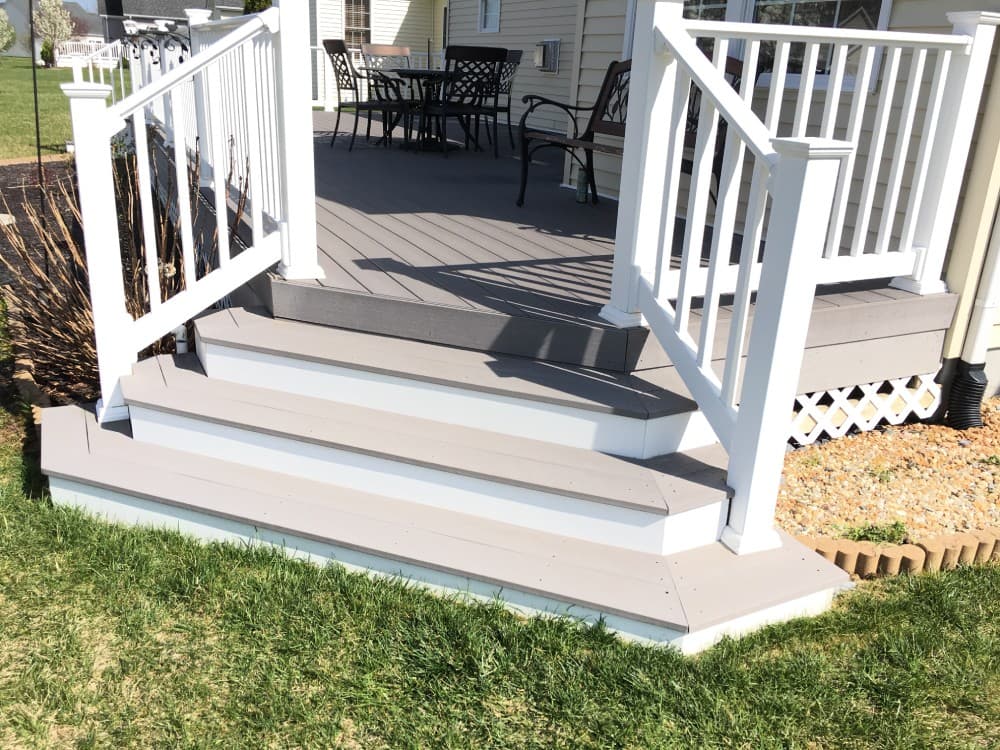
Composite decks usually cost less because the buildup tends to remain closer to the surface. In many cases, the process is more straightforward, using cleaner, dwell time, and a low-pressure rinse rather than a more restoration-style cleaning process.
Cedar decks follow a similar process to wood and also require careful, even cleaning, since uneven results or spot cleaning tend to stand out more.
Factors Affecting Price
Once we inspect the deck, confirm the material, and review the condition and access, we can send a formal proposal outlining exactly what process the deck needs.
We do offer discounts that may apply when you schedule deck cleaning. Our spring promo offers a $100 discount when you book 2 services, such as fence cleaning, house washing, or roof cleaning. We also offer a 5% military and veteran discount, with a maximum total of 15%.
Bundling can also lower the cost because we are already on site. The exact discount depends on the services booked, and we confirm eligibility during the quoting process to avoid confusion.


Wood takes the most involved process because it is porous and holds contamination deeper than what you can see on the surface. A basic rinse does not solve that. We start with pretreatment, then use an emulsifier to help remove dirt, contaminants, and algae from the pores. After that, we pressure-wash the surface evenly and thoroughly, then finish with a wood brightener to restore its appearance. This process is aimed at algae, organic growth, deep contamination, oxidation, and surface staining.
The method matters because wood cannot be cleaned carelessly. It cannot just be sprayed down, however, and called done. We clean it, board by board, so the deck comes out consistent instead of streaked or patchy.

Composite is different because it is plastic, so the grime is usually more surface-level. In many cases, we can apply cleaner, let it dwell for 5 to 10 minutes, and rinse it with low pressure. It usually does not require the same aggressive process as wood. That also means composite does not require an emulsifier, a wood brightener, or a board-by-board restoration approach. Using the right lighter method matters because it cleans the deck without treating it like a porous wood surface that needs more corrective work.

Cedar is wood, so we treat it like wood and follow the same overall process. That means pretreatment, emulsifier, thorough washing, and a brightener at the end. The difference is in how careful the cleaning needs to be once it is finished. Cedar needs medium pressure and very thorough, even cleaning. We do not spot clean cedar because those uneven sections can become more noticeable. The goal is a uniform finish across the full surface, not a cleaned patch next to a darker patch.

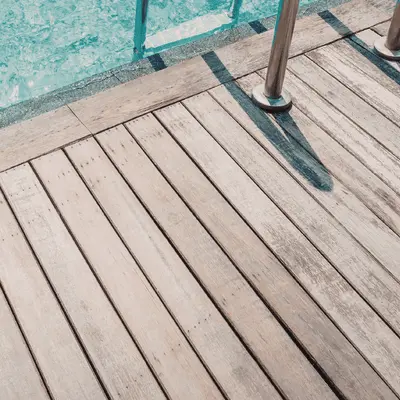
Pool deck cleaning is a common related request, and the process depends on the surface. For concrete pool decks, we pre-treat, surface clean, and post-treat. That gives us a cleaner, more even result while addressing the buildup that tends to collect around pool areas. One of the biggest concerns with pool decks is dirty runoff entering the pool. We handle that practically by working from the edge to the other side, thereby reducing the risk of pushing dirty water where it does not belong.


We do not treat every deck the same. Wood, composite, and cedar each require different methods, pressure approaches, and chemical steps. That protects the material and gives you a better result than a one-size-fits-all wash.

When we clean wood, evenness is part of the job. We work board by board because that is how you avoid striping, streaking, and patchy-looking results. If you want the deck to look consistently clean rather than randomly blasted in sections, this part matters.

Wood cleaning is more than surface rinsing. We pretreat it, use an emulsifier to pull contamination and algae out of the pores, then finish with a brightener after washing. That sequence helps clean more deeply and restore the wood’s look, rather than leaving it dull and uneven.

If a deck is very old and ready to fall over, we will not clean it. That is not us avoiding work. That is us refusing to put you, your property, or anyone on site in a bad situation.

We use eco-friendly detergents and solutions, and we use sodium hypochlorite at a minimum concentration, just enough to kill organic growth. We also use Plant Wash and other neutralizing agents to help protect plants and the surrounding areas. If you have chemical or health concerns, we can provide a material safety data sheet and explain what we are using. We also adjust our solution ratios based on the weather, reducing the ratio in hot weather and slightly increasing it in cold weather, so the cleaners still work effectively.

We follow up quickly by phone and email, schedule an on-site look when needed, and send a formal proposal after inspecting the property. As the service date gets closer, we send a reminder, and about an hour before arrival, we let you know we are on the way. After the work is complete, we follow up to confirm that everything has been finished.

We accept cash, credit cards, checks, Zelle, Venmo, and PayPal. If needed, we can also send an invoice with net-15 or net-30 terms instead of collecting payment on the spot.

If water is not available on site, we can bring our own water. That can be helpful on certain jobs, but it may affect the final cost.

We start by confirming whether the deck is wood, composite, or cedar, and by assessing the overall condition before we clean anything. That lets us match the right method to the surface and spot issues like heavy algae, oxidation, staining, or deep contamination. If the deck is very old and looks ready to fall over, we will not clean it.
Before cleaning starts, we protect plants and landscaping using Plant Wash and other neutralizing agents. We also work in manageable sections, so the process stays controlled. If you are providing the water source, it helps to ensure water access is available, and, if possible, clearing furniture or planters can make the job go more smoothly.
For wood and cedar, pretreatment helps break down buildup before the main wash begins. This is one reason those materials take longer than composites. The goal is to loosen the organic growth and grime so that the deeper cleaning steps can work as intended.
After pretreatment, we apply an emulsifier to wood and cedar to draw contaminants and algae out of the pores. That step matters because porous surfaces hold more than what is visible on the surface. It is also a big reason wood cleaning is more involved than composite cleaning.
Once the chemistry has done its part, we thoroughly clean the surface. On wood and cedar, that means keeping the work even and controlled instead of rushing through it. Cedar in particular needs medium pressure and a very thorough pass because spot cleaning can leave noticeable inconsistencies.
After washing, we apply a wood brightener to wood and cedar. This helps restore the appearance after cleaning and gives the deck a cleaner finished look. It is an important final step when the goal is not just to remove buildup but also to bring the wood tone back up.
Composite follows a simpler process. We apply cleaner, let it dwell for 5 to 10 minutes, and rinse with low pressure. That process is faster and less aggressive because composite does not hold contamination the way porous wood does.
For pool decks, we plan the cleaning path carefully to reduce dirty runoff into the water. We work from the edge to the other side to keep the process as controlled as possible while still ensuring the surface is cleaned thoroughly.

We do not claim a deck-specific warranty here. What we do offer is a straightforward satisfaction policy. If you are unhappy with the result, we come back and make it right. If needed, we may offer a partial refund. Issues like that are rare, but we do not ignore them when they happen.


Most deck cleaning jobs take about 45 minutes to 3 hours, depending on the material, deck size, and how much buildup is present. Composite is usually faster than wood or cedar.
Yes. We base the process on the material. Wood and cedar need a more involved process, while composite usually needs a cleaner, dwell time, and a low-pressure rinse.
We use eco-friendly detergents and solutions, keep our sodium hypochlorite at a minimum concentration, and use Plant Wash and other neutralizing agents to help protect plants and surrounding areas. We can also provide a material safety data sheet if you have concerns about the products we use.
We clean directionally from the edge to the other side to reduce pushing dirty water into the pool. We are careful with how we move through the job.
No. If a deck is very old and looks like it is ready to fall over, we will not clean it. That is a safety decision.
It depends on your property and how quickly buildup returns, but many homeowners schedule after pollen season or when algae starts making the surface look dirty or feel slippery. If your deck is shaded or close to water, buildup can show up sooner.
Yes. We offer a $100 discount when you book 2 services, and a 5% discount for military and veterans, with discounts totaling up to 15% (not more). We confirm eligibility during quoting.

If your wood, composite, cedar, or pool deck needs a thorough cleaning rather than a quick surface rinse, we can walk the property, identify the material, and send you a formal proposal based on the appropriate process for that surface. We clean using material-specific methods; we will not work on unsafe decks; we can provide MSDS information for chemical concerns; and we keep communication clear from scheduling through arrival.
To get your deck cleaning quote in Delaware, call Ortiz Pro Wash at (302) 228-6599. If you are planning more than one service, ask about available discounts when booking.