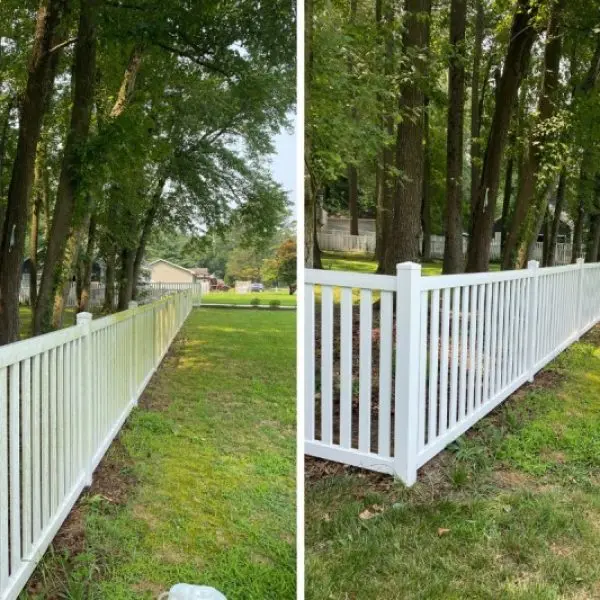
Fence Cleaning in Delaware


A fence sits out in the open all day, every day, which is why it is usually the first thing on a property to turn green. Vinyl fences green up first on the shaded, weather-facing runs, while wood fences hold moisture deep in the grain where algae settles in and stays. In a humid, coastal stretch of the Mid-Atlantic like ours, the salt air and long spells of dampness feed that growth even faster. It is a regional condition, not a sign you have neglected anything, and it is why fences here need periodic cleaning to stay looking right.
We clean both vinyl and wood fences, and we match the method to the material. Vinyl gets an efficient pretreat-and-rinse; wood gets a full restoration process built for porous, weathered boards. At Ortiz Pro Wash, we handle each the way it should be handled, so your fence comes back looking like itself again.
Call us at (302) 228-6599 to talk through your fence and set up a free estimate.


Vinyl and wood fences get cleaned two different ways, because the two materials behave differently and asking for one method to do both jobs is how fences get damaged.

Vinyl cleans up efficiently with a pretreat-and-rinse process worked in sections. We apply the cleaning solution, let it dwell, then wash and rinse that section before moving on, so the solution never dries on the surface. Green algae and organic growth lift away as we go, and a smaller vinyl run is a few-hours job. Vinyl is the most common fencing in the area, and the shaded, weather-facing runs are where coastal humidity drives the most green.

Wood is a bigger job. The vertical boards shed cleaning solution quickly, so they take more product, and the porous grain holds contamination that a surface rinse will never reach. We start with an algaecide to kill the organic growth and bacteria, then apply an emulsifier that pulls contamination up out of the wood pores. From there the fence is pressure washed section by section with enough pressure to lift the growth, and a wood brightener goes on at the end to restore the boards’ appearance. The whole run is worked in sections so the cleaner never dries between application and wash. It is the same restoration approach we use for wood deck cleaning, where porous boards need the same care.


Here is what you get with our crew on a fence job, beyond the clean itself.

Matching the method to the material is the whole point. A wood fence blasted like a vinyl one gets damaged, and a vinyl fence does not need the full wood treatment. We identify what your fence is made of and clean it the right way, not one generic way for everything.

On wood, we do more than wet it down and call it clean. The emulsifier lifts contamination out of the pores, and the wood brightener restores the look of the boards at the finish, so you get a genuinely restored fence that holds its appearance.

We work the fence in sections and never let the cleaning solution dry on the surface before it gets washed off. That is what keeps the result even from one end of the run to the other, with no streaking and no missed patches where the cleaner flashed off too soon.

Fence lines usually run right alongside beds, shrubs, and grass, and our solution runs down the base of the fence as we work. Before we leave, we treat the surrounding landscaping with a neutralizing Plant Wash. It comes standard on every job, included as part of the work.

Reach out by phone or email with your project, and we respond quickly, following up by both email and a phone call. We schedule a visit to your property, identify whether the fence is vinyl or wood, measure the run, and assess how much organic growth has built up. You get a free written proposal that covers the scope and what to expect, so nothing about the job is a guess.
Once you approve the quote, we get the job on the schedule and send a reminder as the date approaches. About an hour before arrival, we let you know the crew is on the way, so you are never left wondering when we will show.
The crew connects to the water supply and prepares the cleaning solutions for your fence type. Before any solution goes on, we note the plants and landscaping running along the fence line so we can protect them through the job.
We apply cleaning detergent to a section and let it dwell, then wash and rinse that section with the power washer before moving to the next. Because the solution never dries on the surface, green algae and organic growth come off evenly, section by section, all the way down the run.
We apply an algaecide to kill the organic growth and bacteria, then an emulsifier to draw contamination up out of the wood pores. The fence is pressure washed section by section with enough pressure to lift the growth and buildup without chewing up the boards. At the end, a wood brightener restores the fence’s appearance, and the whole run is worked in sections so the cleaner never dries between application and wash.
Before we leave, the crew treats the surrounding plants with a neutralizing Plant Wash. If you are home, we walk the finished fence with you so you can see the result up close. The invoice only follows once you are satisfied with the work, because getting it right comes before getting paid.


Fence cleaning is priced by the fence. The material, the number of sections, and the overall footage all move the number, and vinyl and wood sit in different ranges because they take different amounts of work.
If you book fence cleaning alongside another service on the same visit, such as house washing or driveway cleaning, a discounted rate may apply because the crew is already on-site. Ask about it when you get your estimate.


We stand behind the work on your fence. If you reach out and you are not happy with the service, we come back and make it right. If that still does not resolve it, we work with you on a partial refund. Our goal is a result you are glad you called us for, and we will return to earn that outcome.


It depends on the material and the size of the run. A vinyl fence typically takes 1 to 3 hours, while a wood fence is a bigger job and can run anywhere from 6 to 12 hours, and a large wood fence may take one to two days. Wood takes longer because it gets the full restoration process, algaecide, emulsifier, board-by-board washing, and a wood brightener, while vinyl is an efficient pretreat-and-rinse. We give you a firm time estimate as part of the free written proposal, once we have seen the fence in person.
We focus on cleaning fences rather than repairing them, so fixing broken panels, posts, or hardware is outside what we offer. If we spot a repair need while we are cleaning, we will point it out, and we can refer you to a handyman who handles that kind of work.